
Higuerón Gran Málaga Resort: sports, golf, and fine dining overlooking the Mediterranean
Higuerón: a resort for experiencing the Costa del Sol in motion
In the hills above Fuengirola, Higuerón Gran Málaga Resort has created a small world around its hotel. Leiro Suites brings a more exclusive dimension to the accommodation, sport takes centre stage with facilities also used by professional athletes, the golf project extends the resort to Marbella, and the dining options range from casual to the highly personal cuisine of Diego Gallegos at Sollo.
From the heights above Fuengirola, Higuerón looks out over the Mediterranean. What began as a hotel has grown into something broader and harder to define. Guests can move from the swimming pool to a tennis lesson, train at a high-performance sports centre, head to the beach, book a round of golf in Marbella and end the day with a tasting menu awarded a Michelin Star.
Accommodation, sport, wellbeing and gastronomy come together in a resort designed for guests to spend several days there without needing to look far for things to do.
The resort’s history helps explain its current scale. Higuerón Resort was founded in 1999, followed by the Sport Club and spa in 2004. The hotel opened in 2012 with 177 rooms. In 2019, it reopened under the Curio Collection by Hilton brand, and in 2025 the group added what is now Higuerón Marbella Golf Resort to its project. The complex currently has 290 rooms and 113 suites.
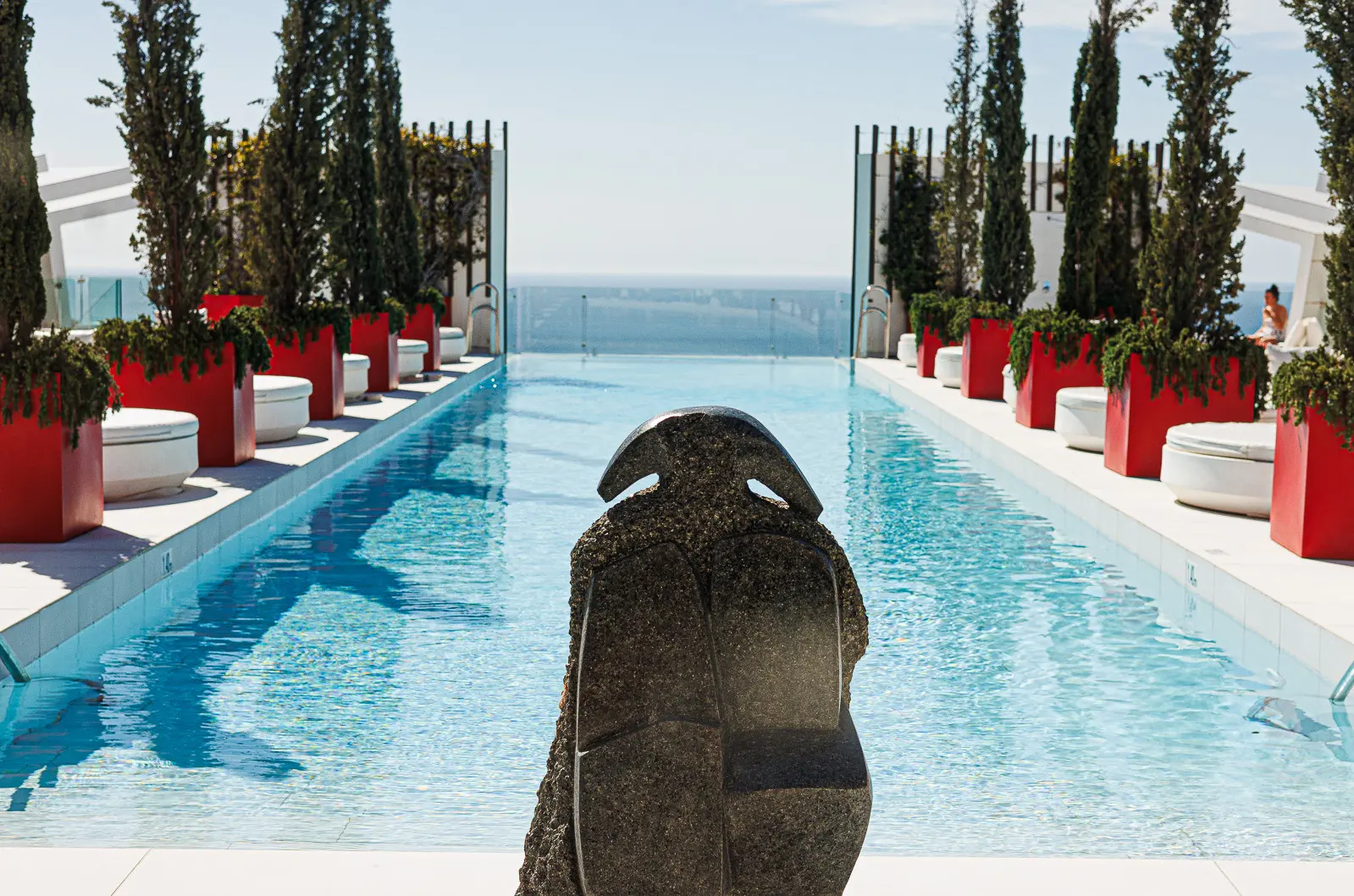
The Mediterranean accompanies much of the stay. It can be seen from the terraces of many rooms, from the rooftop Infinity Pool and from some of the resort’s dining venues. The design favours contemporary interiors, open spaces and a strong presence of art, all of which can be seen in the standard rooms, suites and shared areas.
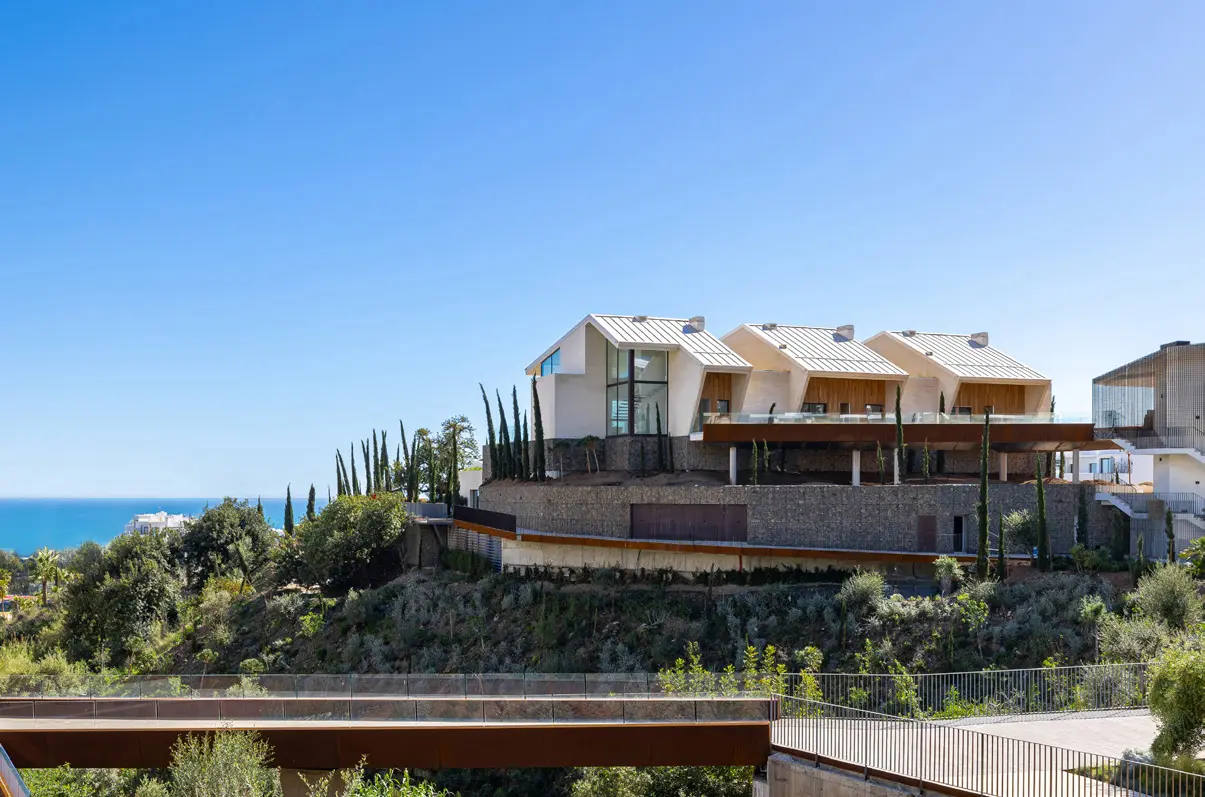
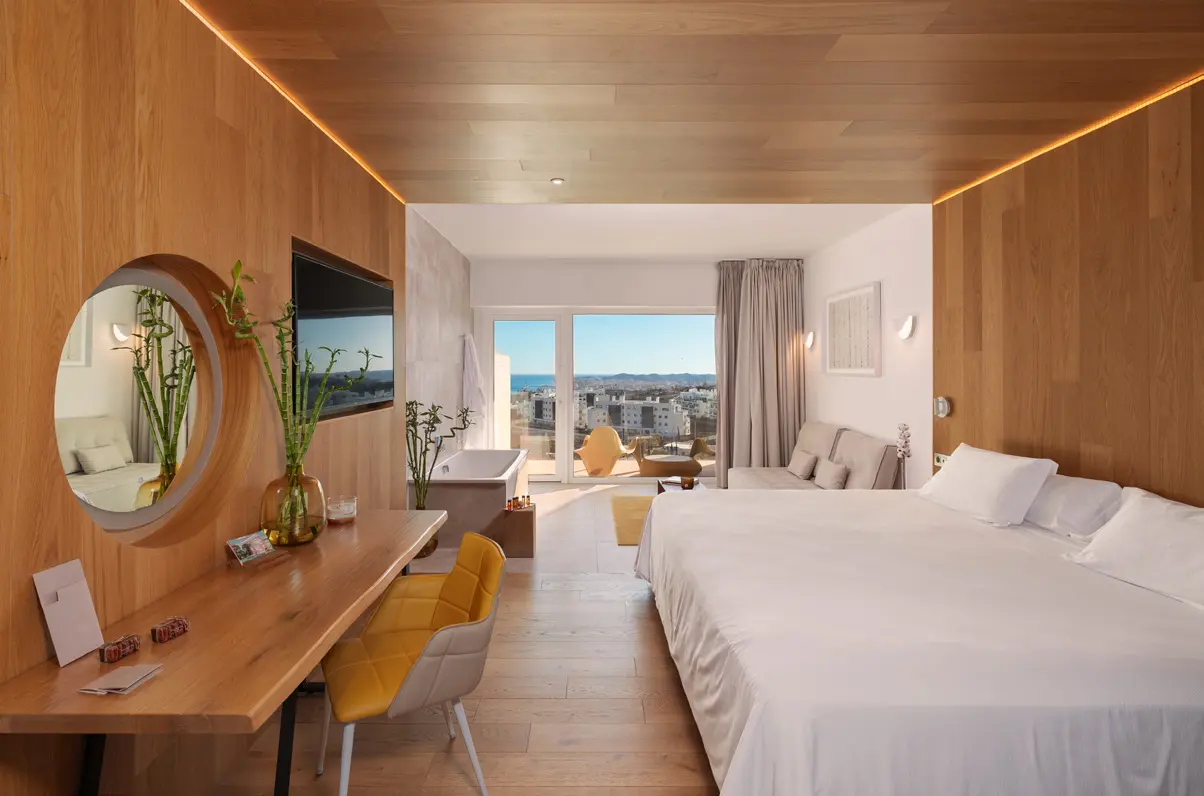
Room types range from approximately 30-square-metre rooms to duplex suites of up to 77 square metres, with a separate living room and terrace.
Leiro Suites: an experience within the resort
The most exclusive accommodation is found at Leiro Residences, conceived almost as a hotel within the hotel. The complex has 113 Leiro Suites, with a range of dedicated services, including personalised reception, tailored assistance and benefits across different areas of Higuerón.
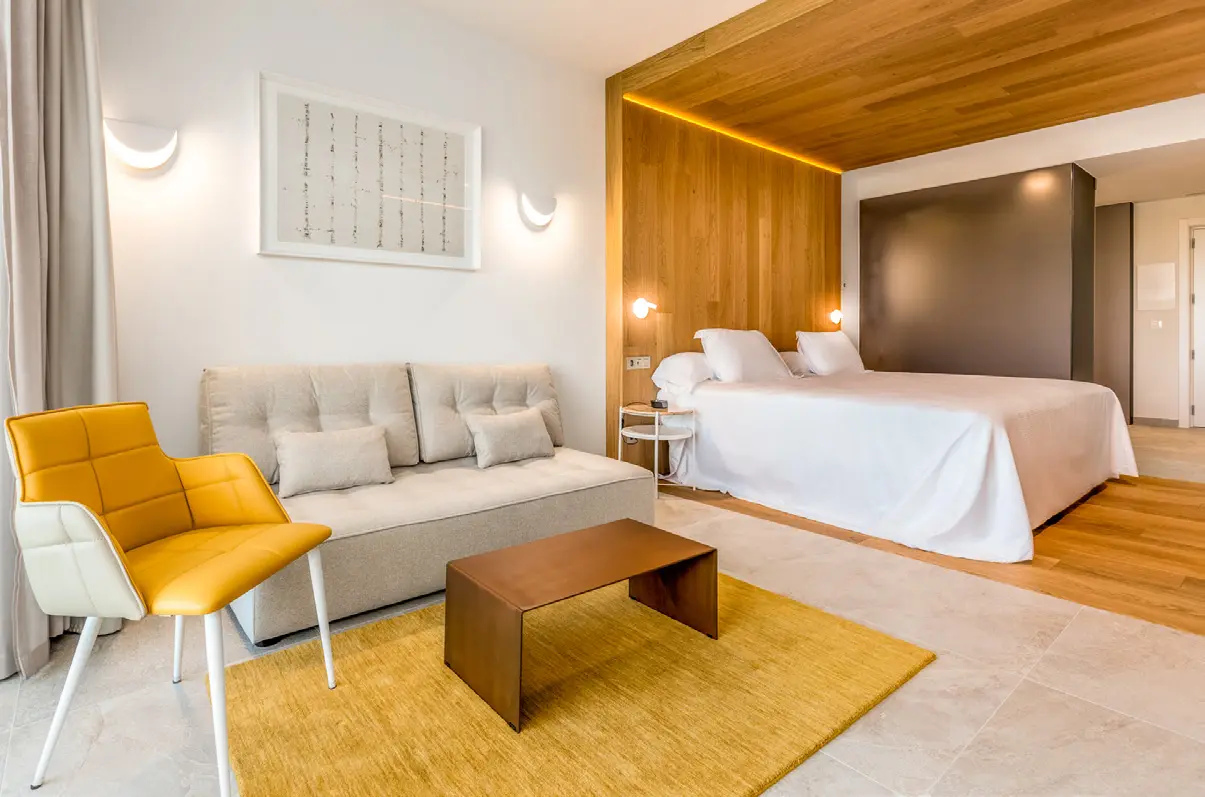
Leiro Suites start at 48 square metres and combine a living room, a bedroom with a private bathroom and a terrace. The Sky suites, located at the highest point, make the most of the resort’s elevated position, with panoramic views and a greater sense of seclusion.
The room is only one part of the experience. Leiro guests can have breakfast beside the panoramic Infinity Pool or request it in their suite. They receive dedicated attention at the Balinese beds by the pool and beach club, as well as access to Sport Club facilities, classes and spa benefits.
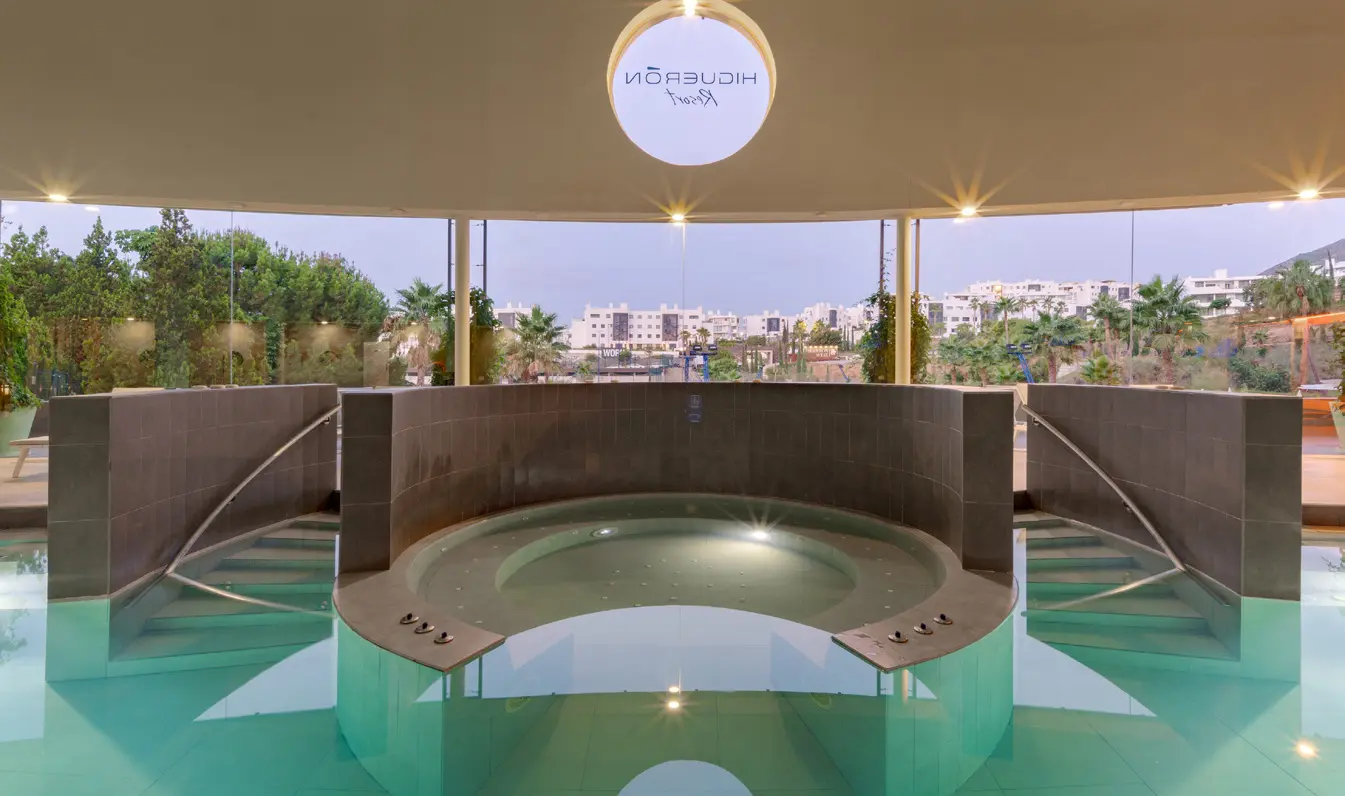
This approach gives Leiro a distinct identity within the resort. Its design shares Higuerón’s contemporary style, while placing greater emphasis on privacy and service. The views add to the experience, especially from the upper floors, where the Costa del Sol forms the backdrop from early morning.
A resort where sport takes centre stage
One of Higuerón’s defining features is the space devoted to sport. Higuerón Sport Club brings together fitness, swimming, padel, tennis, beach volleyball, Pilates and a range of instructor-led classes, alongside facilities for specialised training.
Higuerón Padel Center has nine glass courts with next-generation surfaces, including a panoramic centre court with stands and five other courts designed for outdoor play. Beach Volley Center has five professional courts and an international-standard sand surface. World Tour players have chosen the facilities for pre-season training, and the venue has also hosted the Spanish Championship.
Guests may also encounter athletes training at a higher level. The Embassy, dedicated to basketball, is a high-performance centre with a court equipped to professional standards and approved by FIBA.
Higuerón Tennis Center Jorge Aguirre also deserves a mention. It has hard and clay courts and runs a tennis school for everyone from beginners to players on competition programmes. Training is overseen by Jorge Aguirre, a coach with extensive experience on the ATP and WTA tours.
The same facilities serve very different guests. One visitor might book a lesson during a holiday while, just metres away, a professional player follows a technical and physical training programme. This blend of leisure and high performance captures the resort’s sporting ethos.
Golf between the mountains and the Mediterranean
Higuerón’s expansion has reached one of the areas most closely associated with the Costa del Sol. The former Marbella Golf Country Club joined the group in 2025 and was renamed Higuerón Marbella Golf Resort.
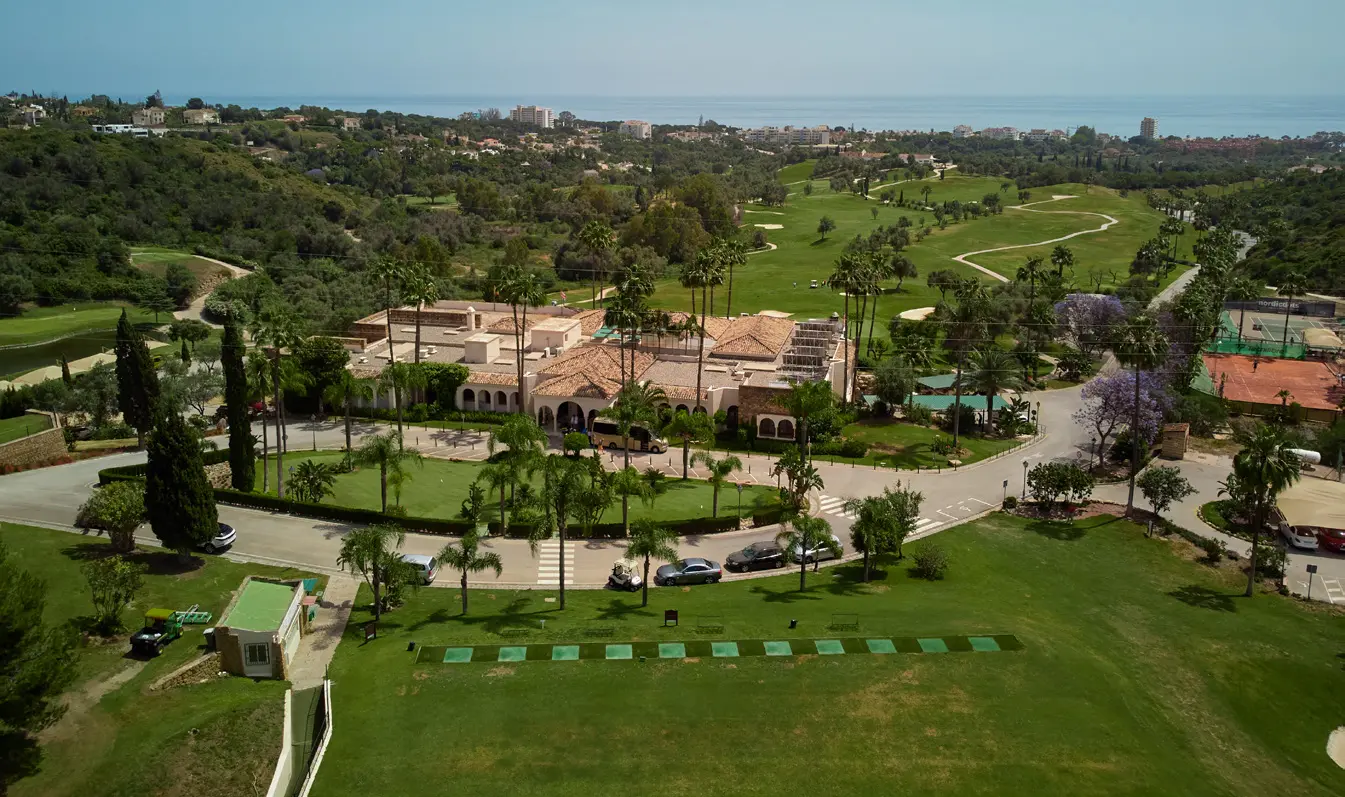
The course first opened in 1994 and was designed by Robert Trent Jones Sr., one of the leading golf course architects of the last century. It is an 18-hole, par-72 course divided into two distinct halves. The first nine holes are narrower and more technical, with more elevation changes and a greater need for accurate placement. The second nine allow players to open up their game with woods and hybrids. Fast greens, strategically placed bunkers and several lakes make each shot a considered one.
During our visit, one of the course managers summed up another of its attractions: “You can see the sea from almost every view of the golf course,” he explained as we walked the first holes.
The course is also entering a new phase as part of Higuerón’s expansion. The plans include a redesign by Robert Trent Jones Jr., who will reinterpret the layout created by his father. The project’s centrepiece will be the future Waldorf Astoria Marbella, the brand’s first property in Spain.
A dining scene that invites guests to stay
Gastronomy is another important part of Higuerón, giving guests the option to change styles without leaving the resort. Its restaurants and bars are spread across the hotel, Sport Club, pools and beach, each with a distinct concept.
Arara Bistro Bar, also associated with Diego Gallegos, serves cuisine influenced by Spain and Latin America, particularly Brazil and Peru. The Japo brings Japanese techniques and Asian fusion cuisine to the beach club, while La Higuerita offers a more informal option by the Sport Club, with dishes made from fresh, locally sourced ingredients.
MED focuses on Mediterranean flavours, combining Andalusian references with Italian, Greek and North African influences. Chupadeo, recognised with the Sabor a Málaga distinction, offers a more traditional Andalusian cuisine based on local produce. The beach club completes the selection with spaces for dining by the sea and lingering over the meal beside the pool, cocktails and Balinese beds.
This variety has also allowed Diego Gallegos to broaden his culinary offering without repeating the concept behind Sollo. He explains that each venue has its own time of day. The Beach Club is especially popular at lunchtime, Japo and Arara mainly serve guests in the evening, while Sollo retains its place as the resort’s fine-dining restaurant.
Diego Gallegos and Sollo
“My cooking begins long before it reaches the plate”
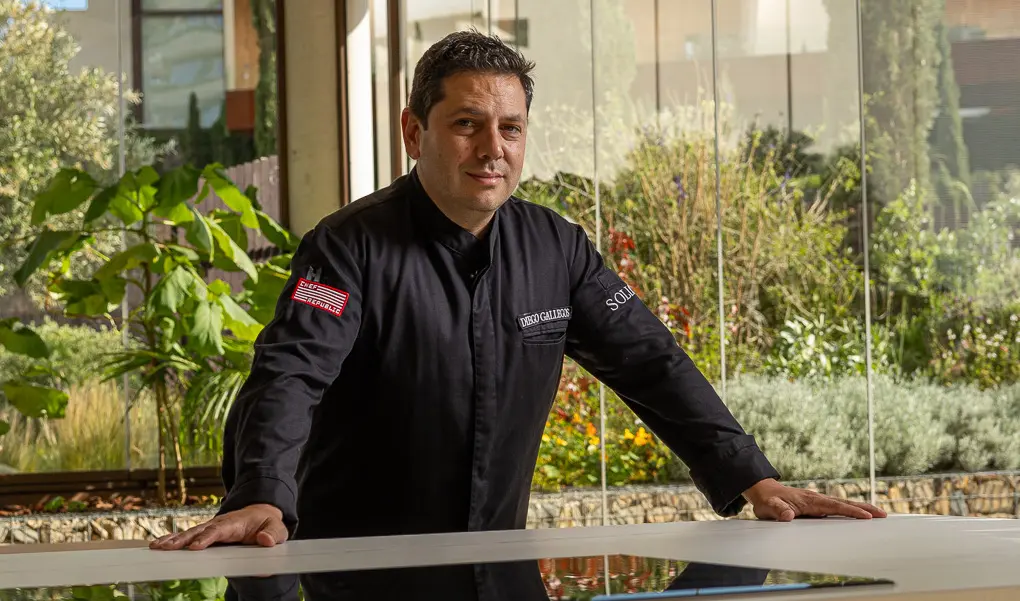
Among Higuerón’s restaurants, Sollo occupies a category of its own. Diego Gallegos has built his cuisine around freshwater fish, aquaponics and research. The restaurant has been awarded a Michelin Star, a Michelin Green Star and two Repsol Suns.
To understand Sollo, it helps to start outside the dining room. The hotel grounds are home to the laboratory and aquaponic system that supply much of the restaurant’s larder. Gallegos puts it simply: “We only cook with river fish.”
That decision led to the creation of a largely self-sufficient production chain. The chef explains how the project began working with the University of Málaga to study species and develop breeding systems. Water from the fish tanks then flows through plants, which use its nutrients and help filter it before it returns to the system.
“What we do is emulate the natural system of fish. The water the fish live in passes through the plants, and the plants filter it,” Gallegos explains. The system is complemented by rainwater collected in cisterns to make up for water lost through evaporation.
Tilapia, tench and catfish are part of this small ecosystem. The team even keeps piranhas as part of its research into future seasons.
Sustainability has long been part of the restaurant’s philosophy. “We started working on sustainability ten years ago, when no one was talking about it,” the chef recalls. Sollo received its Green Star in the first edition in which Michelin awarded the distinction, and the team includes a botanist and a biologist who provide technical support.
Gallegos has also worked with the Riofrío fish farm in Granada for more than a decade. It is the source of the caviar associated with his career. In the early years, sturgeon was at the centre of his cooking. Gallegos explored different ways to use it and applied techniques more commonly associated with meat to freshwater fish.
That approach remains central to understanding Sollo. Catfish can become tripe, sturgeon blood is used to make morsollo, a take on blood sausage, and sturgeon itself can be prepared Rossini-style. The nose-to-tail approach extends to fillets, skin, bones, tails and other parts of the fish that rarely feature in haute cuisine.
There is technique and research, but the results often draw on familiar references. Ceviche and curry appear alongside tripe, pickles, Málaga wine, guava, Andean corn, goat’s cheese and Axarquía honey.
His cooking brings together memories of Latin America with ingredients and recipes he has encountered throughout his career in Andalusia.
The current Caminho 2026 menu captures that evolution. It begins with a series of smaller appetisers that revisit ideas from previous seasons. These include a trout loin taco, a freshwater fish escabeche and sturgeon morsollo, one of the dishes that best reflects Gallegos’s approach to using the whole ingredient.
The main courses develop the same mix of influences. Catfish tripe makes use of the gelatinous texture of the fish’s skin and swim bladder, and is served with chickpeas, piparra pepper oil and mint. Smoked eel comes with green curry, chutney and pickles, while Rossini-style sturgeon is confit in beef fat and served with foie gras, truffle and root vegetables.
Dessert offers another journey through the chef’s background. It includes an Andean corn creation with beetroot, guava with Málaga goat’s cheese, and a combination of dairy, Axarquía honey and citrus.
The dining room currently has just four tables and an open kitchen. This smaller format allows the team to work at a reduced scale and maintain closer contact with guests throughout each service. Gallegos has deliberately reduced the size of the team and the number of services to restore a more direct relationship with his restaurant.
During our conversation, he offers a statement that captures Sollo’s current philosophy: “If I’m not there, the restaurant doesn’t open.”